

2026-W20 Rotary Sourcing Update: Tariff Risks
Week-20 buyer brief on servo hollow rotary tables: U.S./EU trade-rule shifts, bore/load exposure points, and RFQ controls buyer teams must lock this week.
Quick take for week 20: for any new servo rotary RFQ, run both base and tariff-stress quote scenarios before you freeze bore size and load class. Recent U.S./EU rule execution changes are enough to move landed cost and lead time after engineering freeze.
I pulled the last 30 days of policy, trade, and standards signals into buyer-facing actions for:
- automation OEM engineers,
- machine builders and system integrators,
- procurement and supplier-quality teams.
Scope window: 2026-04-10 to 2026-05-10. Region: United States + European Union + Asia-Pacific supply routes.
If you need an immediate RFQ sanity check, start from our buyer guide library and escalate route-risk assumptions through the contact page before PO release.
Applicability, Date, and Limits
- Last verified date: 2026-05-10.
- Applies to: new RFQs, supplier switches, and cost-down redesigns for servo hollow rotary tables and rotary indexing platforms shipping into U.S. or EU channels.
- Does not replace: customs classification rulings, legal advice, or SKU-level export-control review.
- Decision boundary: keep bore-size and load-capacity physics unchanged unless process requirements change; solve trade volatility with sourcing controls first.
What Changed (Last 30 Days)
| Date | Verified change | Why it matters for rotary-table buyers | Evidence strength |
|---|---|---|---|
| 2026-04-13 | U.S. Commerce summary says Proclamation 10908/10909 set 50% tariff for certain steel/aluminum/copper articles and 25% for derivative products under revised 232 execution. | Steel/aluminum-heavy housings, baseplates, couplings, or accessories can shift from "component cost" risk to "classification + material-content" risk. | High |
| 2026-04-23 | Federal Register published procedures under Proclamation 10984: producers can request tariff-rate adjustments via a quarterly milestones process; adjusted rates cannot go below 25% and eligibility is tied to USMCA smelt/cast or melt/pour and facility location rules. | Origin and melt/pour traceability now affects quote validity, not only customs filing. | High |
| 2026-04-29 | Federal Register notice issued technical HTS corrections tied to Proclamation 11021 and clarified treatment of UK-origin steel articles through 2028-01-01. | RFQ HS mapping and "steel/aluminum content declaration" quality become critical to avoid post-PO reclassification surprises. | High |
| 2026-04-23 | EU 20th sanctions package activated an anti-circumvention tool citing re-export of machine tools and telecom items via third-country routes; 60 entities added. | EU-facing importers need stronger route and end-use screening for precision motion assemblies and controls that touch restricted channels. | High |
| 2026-05-05 | U.S. Census FT900 (March 2026) shows goods/services deficit at $60.3B, exports $320.9B, imports $381.2B; deficits with Taiwan and Vietnam remain large. | APAC supply remains structurally important for precision components; route diversity and inventory buffers still matter. | High |
| 2026-05-05 | USITC instituted AD/CVD investigations on air compressors from China, Malaysia, Vietnam; preliminary phase vote due 2026-06-15. | Not a rotary-table case, but a direct indicator that adjacent industrial hardware categories are under active trade-defense pressure. | Medium |
Signal Timeline (Policy -> Sourcing Clock)
Decision implication: after week-20, "best price" comparisons without HTS/material-route controls are no longer decision-grade for servo rotary platform sourcing.
Buyer Impact by Function (Engineering, Procurement, Integration)
| Function | Immediate impact | Failure mode if ignored | 2-week action |
|---|---|---|---|
| Mechanical engineering | Bore-through and housing structure may carry higher tariff-sensitive material exposure. | Design freeze based on outdated landed-cost assumptions. | Add material-content disclosure requirement to drawing release package. |
| Controls engineering | Replacement source may alter inertia, encoder mapping, and servo tuning envelope. | Late-stage tuning instability after source switch. | Require "electrical + inertia equivalence" annex in supplier PPAP/FAT docs. |
| Procurement | HS code + origin + route becomes cost-critical data, not back-office paperwork. | Post-PO duty uplift and margin loss. | Demand dual quote: base route and alternate route with explicit customs assumptions. |
| Supplier quality | Need stronger traceability on melt/pour (steel) or smelt/cast (aluminum). | Audit pass but customs non-conformity later. | Add tariff-traceability checkpoints to incoming quality dossier. |
| Program management | Lead-time risk increases where single APAC route is used for key assemblies. | Build schedule slip due customs or rerouting. | Set risk threshold for safety stock on high-criticality axis modules. |
| EU distributors/importers | Sanctions circumvention screening reaches machine-tool pathways. | Entity/routing compliance incident. | Add end-use and route attestation at quote acceptance stage. |
Bore-Size and Load-Capacity Selection Under Cost/Route Volatility
Do not change core application physics because of short-term policy noise. Instead, keep performance-first sizing and add procurement guardrails.
| Selection scenario | Bore-size tendency | Load-capacity implication | Sourcing vulnerability | Practical control |
|---|---|---|---|---|
| Cable/pneumatic pass-through cell | Larger through-bore preference | Often needs larger bearing set and housing mass | Higher steel/aluminum content sensitivity | Ask supplier to split price by core unit vs structural hardware |
| High axial clamp force process | Higher axial dynamic load margin | Can push to heavier platform class | Duty and freight amplify with mass | Keep 2nd source with equivalent bolt circle + center height |
| High indexing frequency | Thermal and repeatability stability prioritized | May require upgraded reducer/bearing grade | Limited qualified factories per model | Freeze validation plan for both primary and alternate source |
| Retrofit with legacy servo drive | Bore/load must stay within existing motion envelope | Over-sizing may force retune and cycle-time loss | Urgent substitutions raise mismatch risk | Require motor inertia and encoder protocol delta sheet |
| EU export machine build | CE/document chain priority with route control | Load class unchanged, paperwork burden increases | Circumvention screening risk on route/entity | Add compliance declaration gate before FAT shipment |
| Cost-down redesign | Temptation to reduce housing class | May undercut stiffness and life margin | False savings if customs/failure cost rises | Keep minimum stiffness/life acceptance test in RFQ |
Precision Positioning and Control Compatibility Gate
Risks and Limits (Evidence Gaps Included)
| Risk / boundary | Current evidence | What we do not claim |
|---|---|---|
| U.S. tariff execution complexity is rising | FR notices and Commerce summary in this window are explicit. | We do not claim a universal rate for every rotary-table SKU; classification still varies by product makeup. |
| EU route scrutiny for machine-tool pathways is rising | EU sanctions package text explicitly references anti-circumvention due to machine-tool re-exports. | We do not claim every precision automation part is newly restricted; screening must be SKU/entity specific. |
| APAC dependency remains high in trade flows | Census FT900 country-level deficits show large balances with Taiwan/Vietnam in March 2026. | We do not claim immediate supply shortage; this is a concentration signal, not a shortage forecast. |
| Adjacent industrial hardware trade cases are active | USITC initiated compressor AD/CVD investigations in-window. | We do not claim rotary tables are under the same case today. |
| ISO pipeline is active | ISO/TC 299 documents show active draft stages in April 2026. | We do not claim a newly effective mandatory standard for servo rotary platforms in this 30-day window. |
Action Checklist (Who Should Act Now)
Engineering + Controls (This Week)
- Add a mandatory
material-content + HS assumptionappendix to each rotary-platform RFQ. - Keep one alternate model with compatible bolt pattern, center height, and encoder interface.
- Freeze acceptance tests for repeatability, thermal drift, and backlash under both primary and alternate sourcing.
Procurement + Compliance (This Week)
- Require written origin-route declarations (including melt/pour or smelt/cast where applicable).
- Request two landed-cost scenarios:
basevstariff-stress. - Add entity and route screening gate for EU-destined machine builds.
Program / Operations (Next 2 Weeks)
- Set inventory buffer policy for long-lead rotary axis assemblies used in critical stations.
- Run one tabletop escalation drill: "primary supplier route blocked after PO release."
- Update change-control rule so source changes cannot bypass servo retuning review.
Related Internal Playbooks and Next Steps
- Use the /blog news category for weekly trade and supply signals.
- Use the /blog product category for engineering selection and RFQ templates.
- Shortlist model classes in /products before locking RFQ assumptions.
- Validate scenario fit in /solutions when cycle-time and integration constraints dominate.
- Send escalation-ready packets via /contact when route/entity risk appears after quote freeze.
FAQ
1. Should we downsize bore or load class just to reduce tariff exposure?
No. Keep process-driven physics first. Use sourcing controls (dual-source, route declarations, scenario quotes) before changing mechanical class.
2. Which document now matters most at quote stage in the U.S.?
For this window, it is the combination of HTS assumption, material-content statement, and origin traceability aligned with current 232 execution notices.
3. Does the EU sanctions update automatically block all APAC-origin precision components?
No. The signal is about circumvention risk and screening intensity. Apply entity/route/end-use checks, not blanket exclusions.
4. Why include an air-compressor case in a rotary-table brief?
It is an adjacent industrial-equipment signal that trade-defense actions are active in motion-related hardware categories.
5. What is the minimum procurement package for a "decision-grade" rotary platform RFQ now?
At least: mechanical spec sheet, control-compatibility sheet, HTS/material/origin declaration, and base vs tariff-stress landed-cost scenarios.
6. Did a new mandatory ISO or ANSI rotary-table standard take effect in this 30-day window?
No buyer-critical mandatory change was verified in this window for servo hollow rotary tables; ISO robotics work items progressed, but they are draft-stage signals.
If your team is still split on trade-risk assumptions, align on one decision owner and push a single escalation thread through /contact with RFQ version, HTS assumptions, and alternate-route quote attached.
Sources
Author

Categories
More Posts
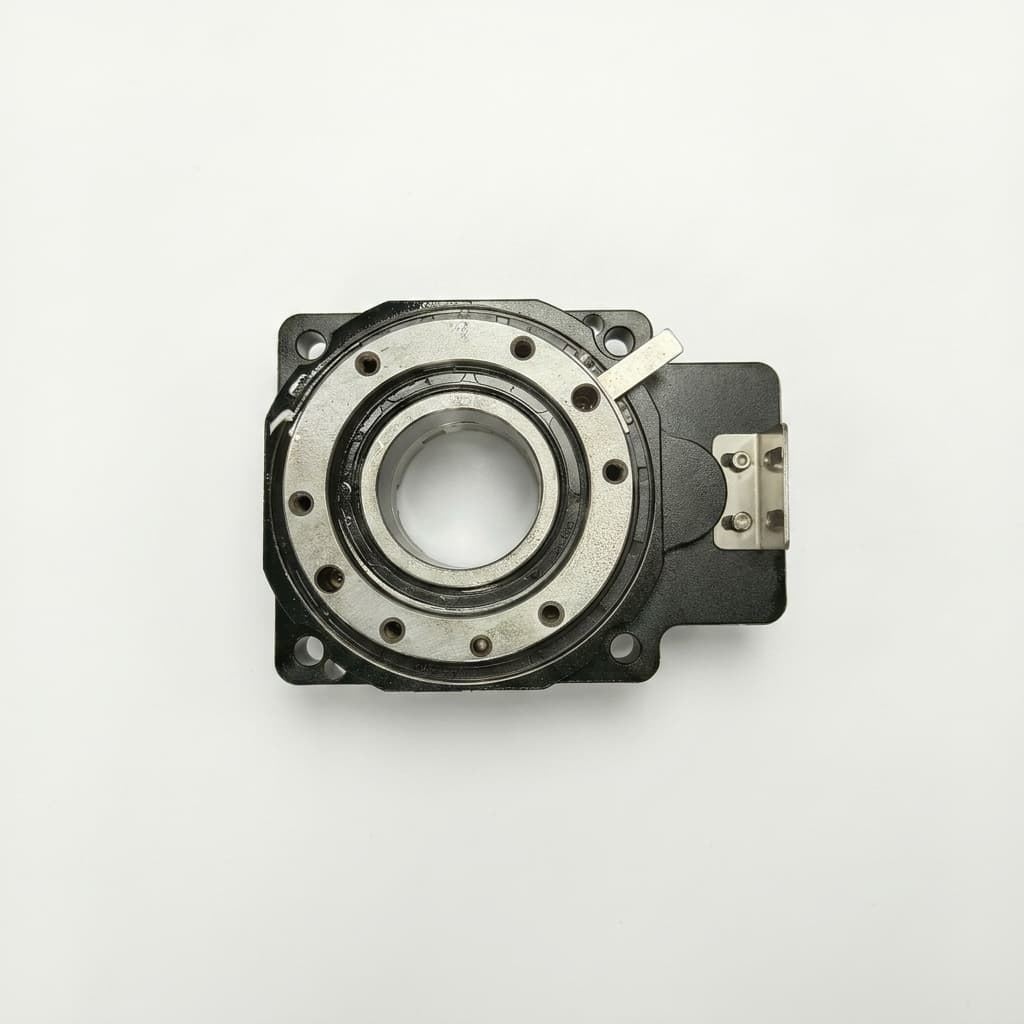
Arc-min vs. Arc-sec in Servo Rotary Actuators: A Backlash Procurement Guide
Compare arc-min vs. arc-sec backlash in servo rotary actuators, calculate radius error, and request the right precision spec before you issue the RFQ.
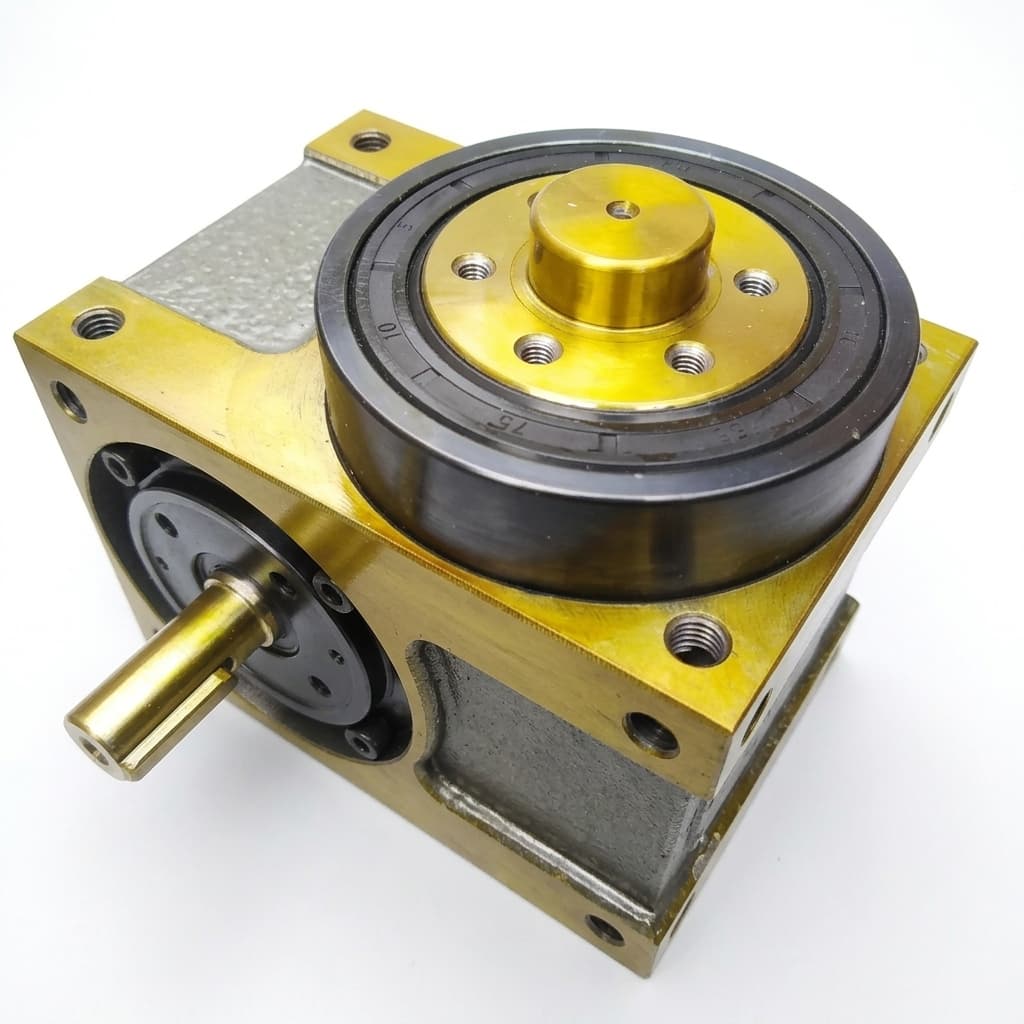
OEM Sample Validation Plan for Rotary Indexers
A sample-stage validation plan linking engineering checks, evidence standards, and procurement sign-off for rotary indexing programs.
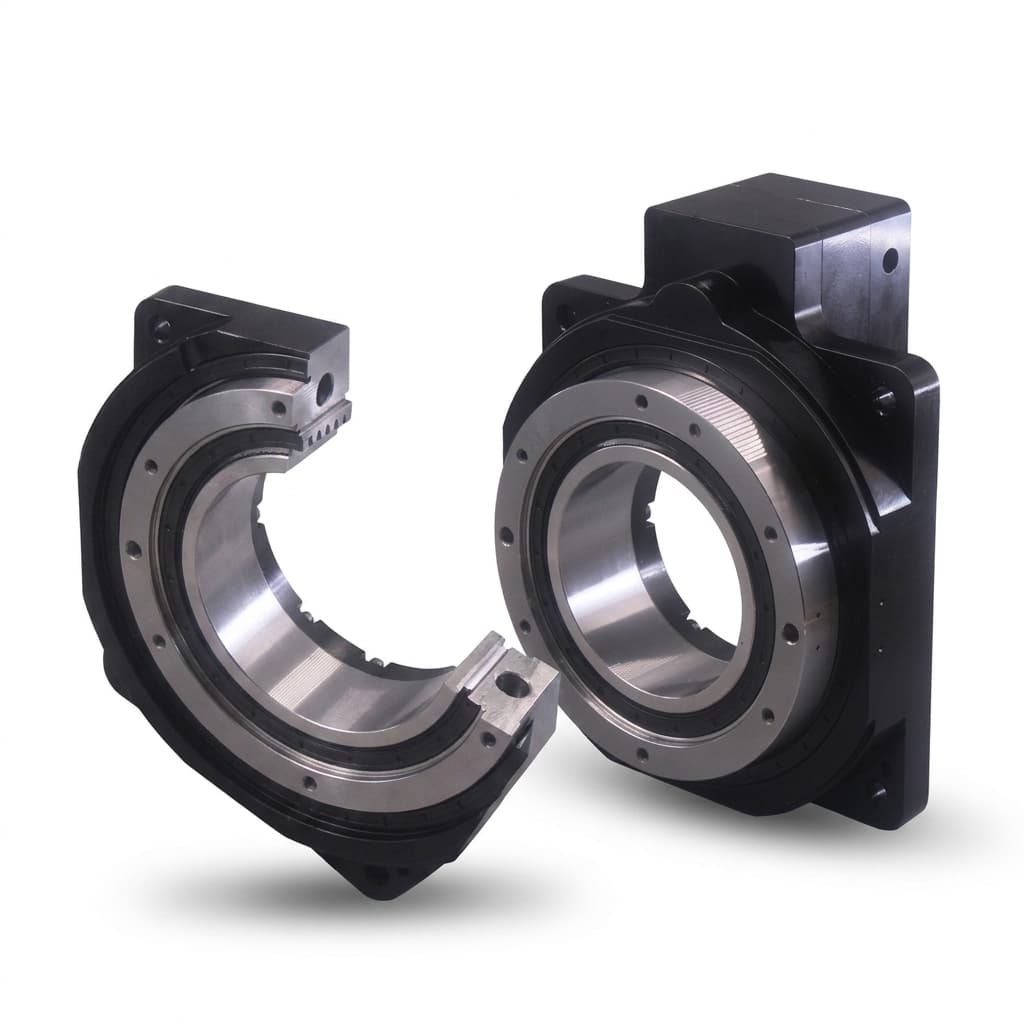
2026-W21 Rotary Sourcing Update: Compliance and Quality Gates Before PO Release
Week-21 brief for servo hollow rotary tables: U.S./EU compliance shifts, APAC supplier signals, and PO-release actions for bore/load and positioning decisions.