
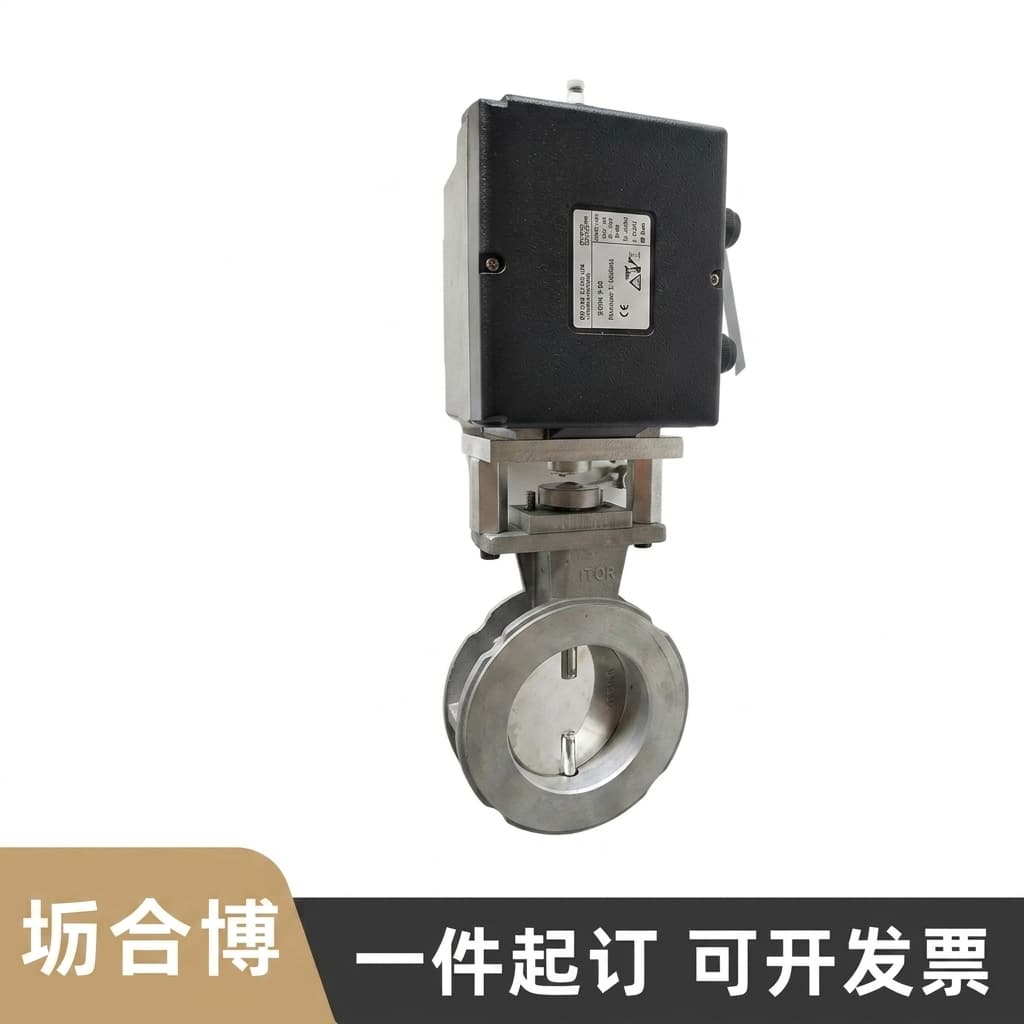
Servo Motor Compatibility Checklist Before PO
Use this pre-PO checklist to verify flange, inertia, encoder, and control assumptions before locking a rotary table supplier.
Do not release PO on catalog claims alone. Release PO only after compatibility is backed by measurement and documented evidence.
Mechanical fit is only half the decision. Many rotary-table schedule slips begin after PO, when controls and tuning constraints show up too late.
I wrote this checklist for buyer teams that need a hard pass/fail gate before commercial release.
Applicability, Date, and Limits
- Last verified date: 2026-05-11.
- Applies to: new RFQ, retrofit replacement, and supplier-switch decisions for servo-driven rotary axes.
- Does not replace: full machine safety validation, controls functional-safety design, or legal warranty terms.
- Decision boundary: this checklist is a compatibility gate before PO; final tuning and process validation still require project execution.
Scope and Decision Boundary
Use this checklist for:
- servo hollow rotary table projects,
- retrofit replacement of an existing rotary axis,
- supplier switch under timeline pressure.
This is not a replacement for full machine safety validation. It is a pre-PO compatibility gate to prevent avoidable integration failures.
Pre-PO Compatibility Gate (Pass/Fail)
| Checkpoint | Required evidence | Starter pass threshold (example) | Fail trigger |
|---|---|---|---|
| Motor model match | Supplier confirmation against exact motor SKU | Exact model code and brake option match | Generic "equivalent motor" with no model map |
| Flange and pilot interface | Controlled drawing revision | Zero critical mismatch on bolt circle, pilot, shaft interface | Any critical dimension unresolved |
| Reflected inertia screen | Calculation sheet + duty profile | High-dynamic indexing projects start with <=10:1 load-to-motor inertia; moderate duty can screen at <=20:1 then verify by tuning | Ratio out of screen and no tuning proof |
| Encoder and protocol fit | Interface control note | Protocol and signal level match controller stack | "Adapter later" answer without design note |
| Reducer ratio suitability | Torque/speed envelope sheet | Meets required speed and peak torque under duty peaks | Rated values only at non-project conditions |
| Repeatability allocation | Test method + target | Rotary axis repeatability budgeted at <=25% of process angular tolerance | No tolerance budget allocation |
| Backlash allocation | Measurement method statement | Backlash limit defined as percentage of process tolerance (commonly <=40% of axis budget) | Backlash not measured bidirectionally |
| Thermal stability | Warm-up test condition | Drift budget defined after thermal soak under representative duty | Performance only measured at cold start |
These thresholds are practical screening values used by many commissioning teams. Final limits must be locked to your actual process tolerance and drive-vendor guidance.
How to Measure Before PO (Minimum Method)
Ask suppliers to provide a minimum evidence pack with the same method across candidates:
- Warm up the axis under representative duty for at least 20-30 minutes.
- Run bidirectional indexing cycles (CW/CCW) for at least 30 repetitions.
- Record max, min, mean, and P95 for repeatability and settling behavior.
- Measure backlash after controlled direction reversal sequence.
- Report all values with instrument type and test environment.
If suppliers use different methods, numbers are not comparable.
Compatibility Risk Matrix for Buyer Review
| Risk pattern | Typical root cause | Business impact | Required action before PO |
|---|---|---|---|
| "Fits mechanically but tunes poorly" | Inertia and ratio mismatch | Commissioning delay and cycle-time loss | Force tuning evidence using your duty profile |
| "Protocol mismatch discovered late" | Controller assumptions not frozen | Rewiring/reprogramming rework | Lock interface control document revision |
| "Repeatability meets catalog but not process" | Measurement condition mismatch | Scrap/rework risk | Define one shared measurement protocol |
| "Replacement motor changed quietly" | Obsolescence handling not defined | Unexpected redesign in production | Add approved equivalence list in PO annex |
Minimum Technical Annex to Attach to PO
Add a one-page annex and require supplier acknowledgment. Include these fields:
| Annex item | Example content |
|---|---|
| Approved motor list | Primary model + approved equivalent list |
| Mechanical interface revision | Drawing ID + revision + critical dimensions |
| Inertia and ratio assumptions | Calculation file ID and boundary conditions |
| Protocol and encoder map | Interface document revision |
| Acceptance criteria | Repeatability, backlash, thermal drift limits |
| Test report format | Required data fields and submission timing |
| Change-control rule | Any motor/interface change requires written approval |
Without this annex, "compatible" becomes a subjective word during dispute.
No-Go Conditions (Stop PO Immediately)
Stop release if any of the following exists:
- supplier cannot provide model-level motor match,
- test values are reported without method and conditions,
- ratio/inertia is outside screen and no mitigation plan is provided,
- interface drawing is pending final revision,
- compatibility depends on unspecified future adapter design.
These are structural risks, not negotiation points.
Buyer Workflow: 48-Hour Internal Sign-Off
Use a fast internal sign-off cadence:
- Day 1 AM: engineering validates interface and ratio assumptions.
- Day 1 PM: controls validates protocol and homing logic.
- Day 2 AM: quality validates measurement method and pass/fail criteria.
- Day 2 PM: procurement issues conditional award or requests re-quote.
This cross-functional check is usually faster than fixing one failed commissioning week.
For project-specific review, send your drive stack, duty profile, and candidate quote pack to [email protected].
Sources
- ISO 230-2:2014 - Determination of accuracy and repeatability of positioning of numerically controlled axes (ISO)
- ISO 286-2:2010 - ISO code system for tolerances on linear sizes (ISO)
- ISO 10012:2026 - Requirements for measurement management systems (ISO)
- Evaluation of Measurement Data - Guide to the Expression of Uncertainty in Measurement (JCGM)
Author

Categories
More Posts
2026-W25 Servo Rotary Sourcing: New Compliance Gates & Sizing Safeguards
Week-25 buyer brief for servo hollow rotary tables: EU 12-month sanction extension, USTR forced labor duty proposals, pneumatic air compressor anti-dumping risk, and bore/load sizing rules.
Pneumatic vs. Servo Hollow Rotary Tables: A TCO and Performance Procurement Guide
A comprehensive lifecycle and Total Cost of Ownership (TCO) analysis comparing pneumatic indexing tables with servo-driven hollow rotary tables for procurement and engineering teams.
2026-W21 Rotary Sourcing Update: Compliance and Quality Gates Before PO Release
Week-21 brief for servo hollow rotary tables: U.S./EU compliance shifts, APAC supplier signals, and PO-release actions for bore/load and positioning decisions.