
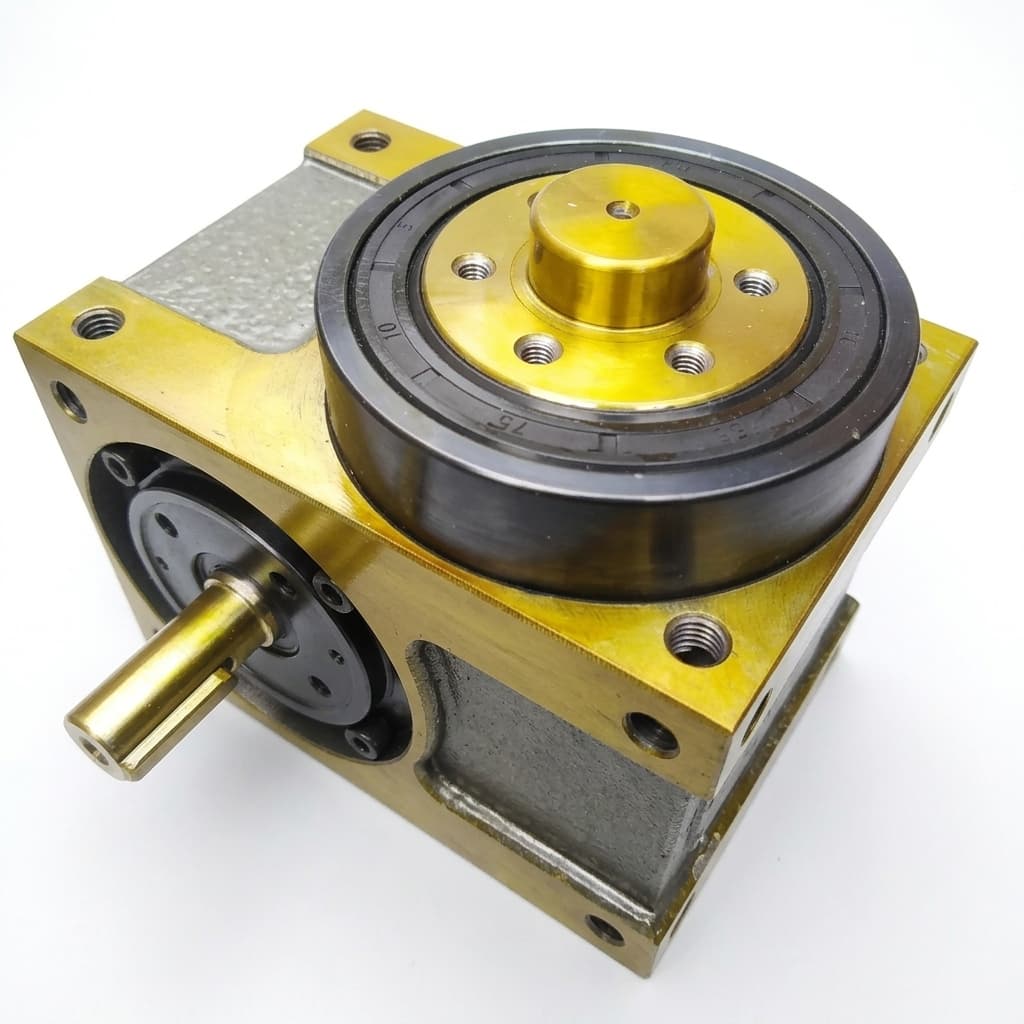
IP67 vs IP69K Servo Rotary Actuators: A Procurement and Specification Guide
Compare IP67 vs IP69K servo rotary actuators for washdown duty, dynamic seal risks, chemical limits, and supplier questions before RFQ.
Specifying the wrong environmental protection for a servo rotary actuator is a fast track to catastrophic equipment failure. For food processing, pharmaceutical, and packaging machinery, the debate often comes down to IP67 versus IP69K.
However, treating these ratings as a simple linear progression in durability is a costly mistake. Procurement teams and engineers must align on what these tests actually measure, and more importantly, what happens when a static rating meets a dynamic rotary shaft.
Scope note, last verified July 20, 2026: This guide applies to global machine builders and OEM procurement teams specifying servo rotary actuators for wet, washdown, or cleanroom-adjacent machinery. It summarizes enclosure-rating implications for supplier qualification; it is not a substitute for a certified actuator test report, hygienic-design audit, or chemical compatibility review.
The Reality Check: Immersion vs. High-Pressure Jets
The core misunderstanding stems from the IP (Ingress Protection) standard itself (ISO 20653).
IP67: Built for Temporary Immersion
An IP67-rated actuator is designed to withstand submersion in water up to 1 meter deep for 30 minutes.
- The Catch: This is a static pressure test. It is highly effective for applications where occasional splashing or shallow pooling occurs, but it is not designed to repel localized high-velocity water streams.
IP69K: Built for Industrial Washdown
The "K" designation means the unit is engineered to survive high-pressure (up to 1450 psi / 100 bar) and high-temperature (up to 80°C / 176°F) water jets.
- The Reality: For intensive, daily washdown regimens using caustic chemicals, IP69K is mandatory.
Comparative Specifications: IP67 vs. IP69K
| Specification | IP67 Actuators | IP69K Actuators |
|---|---|---|
| Water Protection Type | Temporary submersion | High-pressure, high-temp jets |
| Testing Pressure | Static depth (0.1 bar) | Dynamic spray (100 bar / 1450 psi) |
| Testing Temperature | Ambient | Up to 80°C (176°F) |
| Housing Material | Painted aluminum / standard steel | 316L Stainless Steel / Epoxy coating |
| Seal Design | Standard lip seals or O-rings | Multi-stage dynamic seals, often PTFE |
| Application Suitability | Wet environments, occasional splashing | Food/Pharma daily caustic washdown |
| What It Does Not Prove | No resistance to pressure spray | No guarantee of chemical compatibility, hygienic geometry, or rotating-shaft durability |
Procurement Decision Rules
- Use IP67 when the actuator is shielded from direct spray, sees occasional splash or shallow pooling, and cleaning is wipe-down or low-pressure rinse only.
- Specify IP69K when the actuator is exposed to direct high-pressure washdown, hot rinse cycles, or sanitation procedures in food, beverage, pharmaceutical, or similar machinery.
- Escalate beyond a catalog IP claim when the unit will rotate during washdown, face thermal shock, sit in caustic foam, or use connectors that are lower rated than the actuator body.
If the actuator is part of a compact indexing station, also confirm whether the selected hollow rotary actuator frame has a washdown-ready housing, cable exit, and connector strategy.
The "Dynamic Testing" Blind Spot
Procurement teams must be vigilant regarding Dynamic vs. Static ratings. Most standard IP certifications are conducted with the actuator turned off and the output shaft stationary.
In real-world applications, rotary motion creates pressure differentials and wears down shaft seals. A unit that passes IP69K while static might suck in water due to the vacuum created by internal cooling or shaft rotation during a washdown cycle. Always demand to see dynamic testing data or IP ratings guaranteed during operation.
Pre-PO Procurement Checklist
Before releasing a Purchase Order for washdown servo rotary actuators, verify these parameters with your supplier:
- Dynamic Rating Verification: Is the IP rating certified during shaft rotation, or only while static?
- Housing Material: Does the actuator use 316L Stainless Steel or an FDA-approved washdown epoxy? (Avoid standard painted housings).
- Seal Chemical Compatibility: Are the shaft seals resistant to the specific caustic cleaning agents used in your facility?
- Connectors and Cabling: Are the M12/M23 power and encoder connectors also rated to IP69K when mated?
- Breather Plugs: If the unit requires pressure compensation, does it use a hygienic breather that prevents water ingress?
FAQ
Q: Can we use an IP67 actuator in a food processing plant to save cost? A: Only if the actuator is completely shielded from direct spray and caustic chemicals. If the machine requires direct washdown, IP67 will eventually fail due to high-pressure water breaching the seals.
Q: Does IP69K mean the actuator can run underwater indefinitely? A: No. IP69K is for high-pressure jets, not continuous deep submersion. For deep subsea applications, you need actuators rated for IP68 with specialized pressure compensation mechanisms.
Q: How does upgrading to IP69K affect torque output? A: IP69K actuators often use tighter, multi-stage PTFE shaft seals. This increases internal friction, which can slightly reduce the effective continuous torque. Always check the derated torque-speed curve with the manufacturer.
Next Steps
Selecting the right environmental protection requires balancing upfront costs against the severe risk of unplanned downtime. If you are designing a new machine for a harsh environment, our engineering team can help you validate the required specifications.
Contact our application engineers to discuss the optimal servo rotary actuator for your specific washdown or cleanroom requirements.
Sources & References
Author

Categories
More Posts
Servo Motor Compatibility Checklist Before PO
Use this pre-PO checklist to verify flange, inertia, encoder, and control assumptions before locking a rotary table supplier.
Inertia Mismatch in Servo Rotary Tables: A Sizing & Procurement Guide
Learn how inertia mismatch affects servo hollow rotary tables, calculate ratios, avoid tuning failure, and ask suppliers for the right sizing proof before RFQ.
Arc-min vs. Arc-sec in Servo Rotary Actuators: A Backlash Procurement Guide
Compare arc-min vs. arc-sec backlash in servo rotary actuators, calculate radius error, and request the right precision spec before you issue the RFQ.